

Gym Recovery Room or Another Coach: How to Decide
Recovery equipment can be a good buy for your gym. But the reason the sales rep gives you is the wrong one.

A New Year member is lost the first week they miss. Here is what to say before that week, during it and after it.


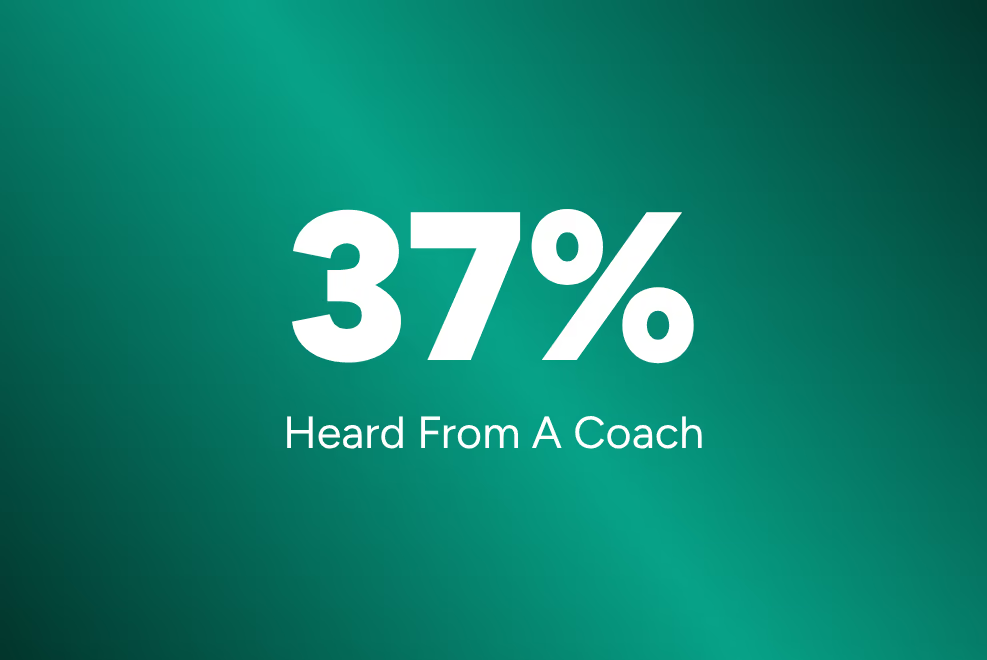
A New Year member who cancels in March did not leave in March. Economists Stefano DellaVigna and Ulrike Malmendier followed 7,752 members of 3 US gyms for 3 years. On average, members on a monthly plan stopped coming 2.31 months before they cancelled. That is about 10 weeks of paying without coming.
For New Year members, those 10 weeks probably start in January. Strava, the running and cycling app, looks for the day when its users give up the most. That day always falls in the first 3 weeks of January.
So the real question is not how to stop cancellations in March. It is what happens when a new member misses a week for the first time. This article explains that week, and gives you the words to use before it, during it and after it.
On the 2nd Friday of January, Strava users recorded 17.3% fewer activities than normal.
What members paid, on average, between their last visit and the day they cancelled.
For 1 member in 5, the gap between the last visit and cancelling was 4 months or more.
It starts with a plan that is too big. In the same study, members expected to come about twice as often as they really did. So a new member who promises 4 sessions a week is very likely to miss some in January.
Missing is not the real problem. The problem is what the member thinks after. Researchers Janet Polivy and Peter Herman studied this with people on a diet, and they call it the what-the-hell effect. After one slip, people feel that the whole plan is ruined, so they stop trying. A member who misses one week feels like someone who has already failed. Staying home becomes easier than coming back.
We all want to become better people, but often we have self-control problems.
The best proof comes from a very large test. In 2021, a team led by Katherine Milkman tested 54 programs on 61,293 members of 24 Hour Fitness, and published the results in the journal Nature. The program that worked best was not a challenge or a big prize. It gave members a tiny reward, worth about 9 cents, each time they came back after a missed workout. So the moment that matters most is the return after a miss, and even a very small push helps.
You cannot stop a new member from missing a week. But you can prepare for it at 3 moments: the day they join, the week they miss, and the day they come back. For the messages, only text members who agreed to receive messages from you. If you are not sure, call or email them instead. The last moment uses the same idea as the 10-second floor check-in.
The first missed week will happen. What you decide is whether the member comes back after it.
The message works best when it offers a clean new start. Researchers Hengchen Dai, Katherine Milkman and Jason Riis counted the visits of 11,912 gym members for 442 days. At the start of a new year, members were 11.6% more likely to come. At the start of a normal week, they were 33.4% more likely to come. So Monday is a good day to offer a new start.
The words matter too. In another test by the same team, 165 people chose a date for a reminder about a personal goal. When March 20 was presented as a normal Thursday, 7% chose it. When it was presented as the first day of spring, 26% chose it. That is why your message should say that a new week is starting.
On the day they join, say:
"Most people miss a week in January. It's normal. If it happens to you, I will text you on the Sunday and we will just start again on the Monday. Is that okay?"
After 7 days with no visit, text them on Sunday evening:
"Hi [name], a new week starts tomorrow. Do you want me to keep you a spot at [class and time] on Monday? Just reply yes and it's yours."
When they reply yes:
"Great, you're booked for Monday at [time]. Ask for me when you arrive."
If they did not answer, send one last message the next Sunday:
"Hi [name], a new week starts tomorrow. Should I keep you a spot at [class and time]? If now is not a good time, just tell me and I will stop writing."
Stop after these 2 messages. Do not add a discount, because it turns your message into an advert.
The promise you make on day 1 is what makes the Sunday message welcome instead of annoying.
In January 2027, block the Sunday evenings of January 10, 17, 24 and 31. The first 2 matter most, because they come right after the weeks when most people give up. January 31 is special, because Monday, February 1 starts a new week and a new month at the same time.
You should also know the limits. These studies were done in US health clubs, in a big US chain and in a university gym, and Strava users are runners and cyclists. Nobody has tested this exact routine in an independent gym. So test it on your own January members. After 4 Sundays, count how many members missed a week, and how many of them came back.
A $50 member who cancels at the end of February pays you 10 months less this year.
Programs that worked raised visits by 9% to 27%. Few still worked after the 4 weeks.
A new member will miss a week. Decide today what you will say to them on the Sunday after.
We’re on a mission to transform the fitness industry, one gym at a time.